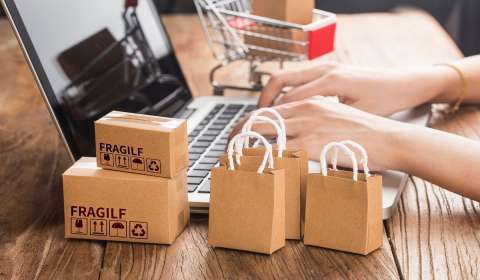
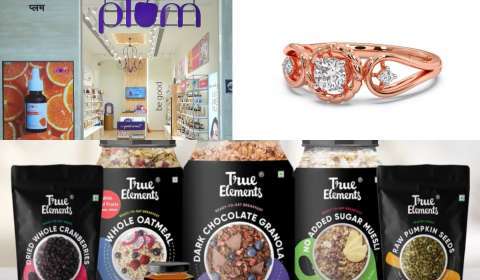
D2C brands get the advantage to showcase their story directly to the customers and can achieve the center platform as it directly delivers products and services to the end customers.
India has 190 million online consumers and around 700 million internet users, making it the third-largest digital retail market after China and the United States.
In India, direct-to-consumer (D2C) brands could be looking at a $100 billion addressable consumer opportunity by 2025, according to estimates by Avendus Capital.
For a D2C brand, the content on the website, app, and social media act as a discovery destination, educating consumers, engaging them, and intuitively guiding them through the journey of making a purchase.
The backbone of any D2C brand is being able to advertise digitally and to a very focused and customized target audience and this has made us reach out to customers in corners of the world, unlike in traditional media.
The meat industry needs an overhaul. While leading D2C meat brands have transformed the experience of meat purchase for consumers, the purchase experience for bulk buyers continues to remain archaic.
Vivek Gupta, Co-Founder of meat delivery start-up and India's first D2C unicorn Licious stated, "The Indian consumer is evolving very fast. So a lot of problem statements in India need Indian solutions and that is where D2C plays a very important role."
The brands are seeing a healthy increase in positive consumer sentiments over the last few months, making this festive season one of the most anticipated periods for the D2C industry.
A makeover revolution of sorts is unfolding in India's D2C beauty and personal care space. A cohort of clean, culturally rooted, and ethical brands are making their presence felt with beauty recipes out of kitchens, forests, and the wonders of Ayurveda.
According to reports, online stores with a social media presence, such as a Facebook and/or Instagram account, have 32 percent more sales than the average store that is not present on social media.
While the success and scalability of the D2C route might vary for brands depending upon their category, D2C e-commerce still holds its ground strong enough for any business that wants to strengthen and control its sales and customer relationships.
D2C scaling requires a nuanced and integrated understanding of consumer channels and deep-diving over a period of time into the metrics to fuel growth and expansion.
Rising competition in D2C has led to brands aggressively investing in technology solutions to solve various business problems across the operation cycle like order management, inventory management, warehouse management, Logistics and Omnichannel solutions